Pelvic Floor Muscle Spasms in Men: How to Identify and Treat Them
Pelvic floor spasms affect men just as much as women, but men’s pelvic health is rarely discussed, and because of that, many men end up suffering in silence.
For many men, it starts as a tightness that won’t go away, and strange tension deep in the lower abdomen. Often, this is caused by pelvic floor dysfunction.
The pelvic floor muscles form the base of the body. When those muscles spasm they restrict blood flow and irritate surrounding nerves. Over time, that tension turns into pain and even changes in sexual or urinary function.
This article breaks down what causes pelvic floor spasms in men and what steps actually lead to relief.
What Pelvic Floor Muscle Spasms Feel Like
Pelvic floor spasms in men can present in many different ways, often making them difficult to identify at first. Some describe it as a tight band of muscle behind the scrotum, almost like the sensation of sitting on a small knot or golf ball. Others feel a deep, internal ache near the tailbone or a pressure that sits low in the pelvis, around the perineum (the area between the anus and the base of the penis).
These sensations can range from subtle tightness to sharp, burning discomfort that radiates into the lower abdomen, groin, or inner thighs. In some cases, men report a constant urge to urinate without actually needing to go, or the feeling of incomplete emptying after urination. This happens because the same muscles responsible for relaxing during urination, the levator ani and coccygeus, are held in a semi-contracted state.
Acute vs. Chronic Pelvic Pain Syndrome
Acute spasms are often short-lived and linked to a trigger like an intense workout, sexual activity, cold exposure, or a stressful event. The muscles seize briefly, similar to a calf cramp, and may release on their own once the trigger passes.
Chronic pelvic floor tension, by contrast, builds gradually. Over time, micro-clenching during stress, prolonged sitting, or poor posture conditions the muscles to stay partially “on.” This can create a constant sense of pulling or dull pressure that never fully resolves, even at rest.
The Somatic Dimension: How the Body Stores Tension
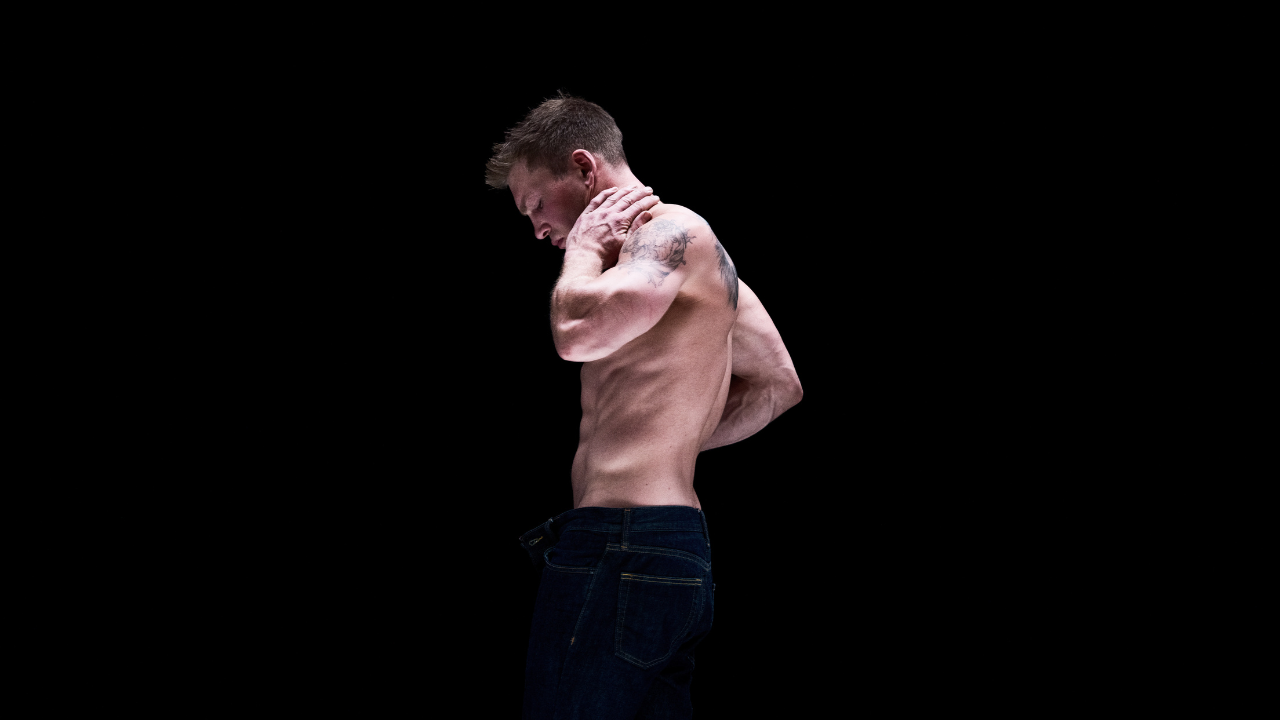
The pelvic floor is one of the body’s most sensitive barometers of stress. It responds to subtle emotional and psychological pressures. In essence, it functions as a muscular mirror of the nervous system, tightening when we feel threatened or overly controlled, and relaxing when we feel safe and at ease.
This is part of the body’s protective reflex system. When the brain perceives danger, it activates the sympathetic “fight or flight” response. The diaphragm and pelvic floor all contract reflexively to brace the core and shield vital organs. While this reaction is adaptive in moments of true threat, the problem arises when stress is constant but not physically resolved, keeping the nervous system in a mild but persistent state of readiness.
Over time, this produces a hypertonic pelvic floor, a state where the muscles of the pelvic basin remain partially contracted even during rest. Unlike a strong or toned muscle, a hypertonic muscle is one that has lost its full range of motion. It cannot fully relax or lengthen, and that restriction impairs circulation, nerve function, and tissue elasticity.
In men, this pattern can feel like a deep internal gripping or holding. It’s often subconscious, as it is the body’s way of maintaining control or bracing against internalized stress. This is why pelvic floor dysfunction is so often seen in men with high-performance lifestyles, as explained in this Bloomberg article about Wall Street Stress and Male Pelvic Floor Therapy.
From a somatic perspective, the pelvic floor is also tied to core emotional regulation. It’s the base of the nervous system’s grounding mechanism and the foundation of stability and safety in the body. When chronic stress causes the muscles here to tighten, the body’s baseline state shifts toward vigilance rather than rest. Many men describe a background sense of unease or “not being able to switch off,” which mirrors the underlying muscular tension.
This connection between the nervous system and the pelvic floor also explains why standard medical tests often miss the problem. Imaging or prostate exams may show nothing abnormal, because the dysfunction lies in muscle tone and neural signaling. Only when the body is assessed as an integrated system does the full picture emerge.
Key Causes of Pelvic Floor Spasms in Men
1. Heavy lifting and overexercising
Intense training, especially with poor breathing technique, keeps the core braced under pressure. When men lift heavy or overactivate the abs without releasing afterward, the pelvic floor remains locked in the same holding pattern. Over time, this creates chronic tightness and a sense of fullness or soreness in the lower pelvis.
2. Long hours of sitting
Sitting compresses the pelvic outlet, the space between the sit bones where the pelvic floor rests. Extended pressure limits blood flow and traps the muscles in a shortened position. Over months or years, this can desensitize the area, leading to dull pain or spasms that flare up.
3. Cycling and repetitive impact
Cycling places direct pressure on the perineum, the soft tissue between the scrotum and anus, and on the pudendal nerve that runs through it. Continuous vibration and compression can irritate the nerve and surrounding fascia, leading to tingling or a burning sensation that’s often mistaken for prostate trouble.
4. Constipation and straining
Forcing bowel movements repeatedly increases intra-abdominal pressure, forcing the pelvic floor to contract hard against resistance. Over time, this pattern leads to muscular fatigue and tightening, making it even harder to relax and empty the bowels comfortably.
5. Injury or surgery
Scar tissue from hernia repairs, prostate surgery, or lower abdominal trauma can limit the natural glide of the muscles and fascia. The body compensates by tensing surrounding tissue to protect the area. This guarding reflex, while useful at first, often remains long after healing and can cause restricted circulation in the pelvis.
6. Chronic stress and anxiety
When the nervous system stays on high alert, the pelvic muscles tighten automatically, just like the shoulders or jaw. The pelvis is one of the body’s main holding zones for fear and control. Even when a man looks calm, his nervous system may still be keeping his pelvic floor engaged, creating a constant background tension that never fully lets go.
7. Breath-holding and poor respiratory habits
Breath and the pelvic floor move together. When the diaphragm drops during inhalation, the pelvic floor should expand; when we exhale, both structures gently rise. Men who habitually hold their breath interrupt this rhythm. The pelvic floor never receives the signal to release, and tension accumulates deep in the pelvis.
8. Sexual tension and performance pressure
During arousal, many men unconsciously tighten their pelvic floor muscles to increase sensation or maintain erection. This can create a feedback loop where arousal equals contraction, and relaxation feels unsafe. Over time, the body forgets how to soften during excitement, leading to pain after orgasm or difficulty sustaining erection without strain.
9. Incomplete release after ejaculation
The pelvic floor contracts rhythmically during orgasm, but ideally relaxes fully afterward. When the nervous system is tense or the body is rushed, those muscles may stay partially contracted. Over time, this leftover tightness becomes the baseline, contributing to the hard flaccid state some men experience.
10. Postural imbalance
Rounded shoulders, a tilted pelvis, or weak glutes all change the way the pelvic floor bears weight. When the pelvis tilts forward, the muscles shorten and stay tight. When it tilts back, they overstretch and fatigue. Both imbalances disrupt the natural coordination between the hips, spine, and pelvic sling, setting the stage for spasms and pain.
The Role of the Prostate and Deep Pelvic Tissues

The prostate sits at the very center of the male pelvic floor. It is a small but complex gland encased by layers of muscle, fascia, and connective tissue. Anatomically, it rests just below the bladder and in front of the rectum, surrounded by the same levator ani and deep perineal muscles that form the pelvic sling. Because these muscles contract and relax with nearly every basic function, any sustained spasm or imbalance in this area directly affects the prostate’s environment.
When the pelvic floor becomes hypertonic, the muscles that cradle the prostate can tighten unevenly, compressing surrounding blood vessels and nerves. This tension can mimic symptoms of chronic prostatitis, such as aching after ejaculation, urinary urgency, or perineal discomfort. In fact, studies show that a significant percentage of men diagnosed with “non-bacterial prostatitis” have pelvic floor muscle dysfunction.
Internal & External Release and Wand Work as Manual Therapy
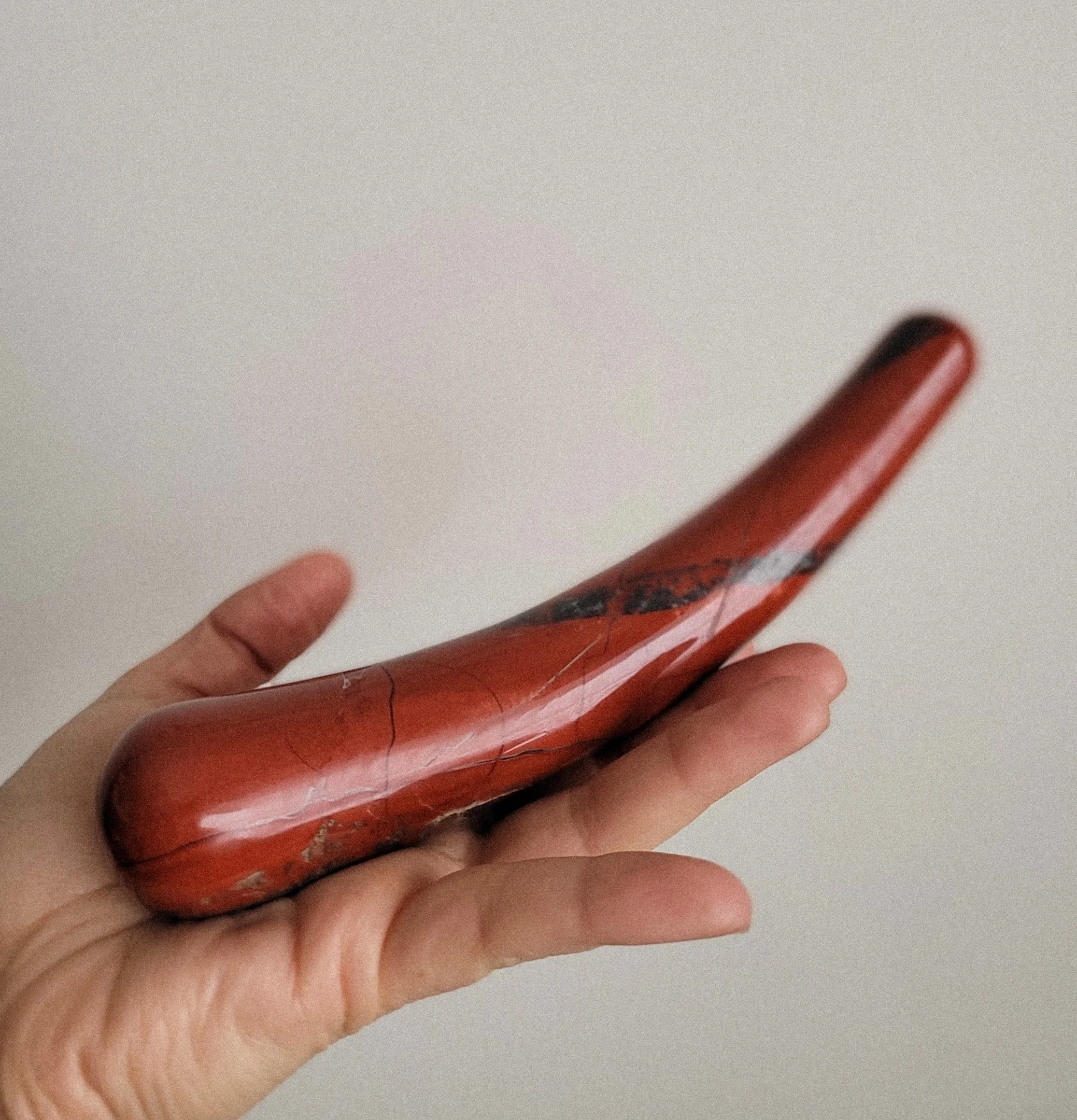
The muscles of the pelvic floor sit deep in the body. When they’re locked in spasm, stretching or simple movement won’t reach them. The most effective way to restore balance is through direct release and slow, deliberate work that helps the muscles remember what relaxation feels like. This can be done both externally and internally.
External release is the entry point. Much of the pelvic floor’s tightness is supported by surrounding muscles like the the glutes, inner thighs, adductors, and the fascia around the perineum. Gentle pressure through these outer tissues begins to open space for circulation and oxygen to return to the deeper layers. Using fingertips or a smooth wand, slow movements along the inner thighs and the area between the sit bones help loosen the superficial fascia that binds the pelvic sling. When done consciously, the nervous system registers this as safety and the muscle tone begins to drop and the subtle sense of clenching starts to fade.
Internal work can address the true center of the spasm. Inside the rectal wall sits a network of deep stabilizing muscles and connective tissue around the prostate. When they’re hypertonic, they squeeze continuously, compressing nerves like the pudendal and restricting the flow of blood and lymph through the pelvic basin.
Internal myofascial release targets these layers directly. A smooth, curved wand, designed specifically for pelvic use, allows gentle contact with the inner wall of the pelvic floor. With slow pressure and relaxed breathing, the wand can be used to trace along the deeper fibers, pausing at points that feel tender or dense. These are trigger points which small contractions in the muscle fibers that hold the memory of bracing.
To Learn More Read our Blog: The Power of the P-Spot: Perineal Massage for Him Made Easy
Practices for Relaxing a Hypertonic Pelvic Floor
1. Diaphragmatic Breathing
The diaphragm and pelvic floor operate as synchronized partners, moving together with every breath. When the diaphragm descends on inhalation, the pelvic floor lengthens and expands to accommodate the internal pressure; when we exhale, both structures gently recoil. Shallow breathing and constant abdominal engagement disrupt this natural coordination, keeping the pelvic floor in a perpetual state of tension.
By directing breath into the lower ribs and belly rather than the chest, the body re-establishes internal movement. The gentle expansion of the abdomen and perineum on each inhale massages the pelvic organs and provides sensory feedback that relaxation is safe. Over time, this rhythm retrains the nervous system to shift from sympathetic arousal (fight-or-flight) into parasympathetic calm and the pelvic floor, which mirrors the nervous system’s state, begins to soften accordingly.
2. Reverse Kegel Exercises
A reverse Kegel is the practice of teaching the pelvic floor to release instead of contract. For men, it means consciously lengthening the muscles at the base of the pelvis, the same ones you’d use to stop the flow of urine or hold in gas, and then letting them gently expand and drop downward.
To do it, start by breathing into your lower abdomen. On the inhale, let your belly rise and imagine the area between your anus and scrotum softening and widening. You might feel a subtle downward stretch or a sense of heaviness in the pelvis. On the exhale, don’t squeeze or lift; simply let the body return to neutral.
Most men’s pelvic floors are habitually tight, and he reverse Kegel retrains the muscles to let go, restoring their ability to move and breathe with the rest of the body.
3. Hip and Pelvic Mobility Work
Hip and pelvic mobility work helps the body move in a fluid, stable, and connected way from the spine down through the legs. The pelvic floor is part of a chain that includes the hips, glutes, hamstrings, and lower back. When those areas stiffen, the pelvic floor picks up the slack by tightening to keep the body stable.
To undo that pattern, movement has to return to the base of the body. Start simple with slow hip circles, gentle pelvic tilts while lying on your back, or deep supported squats where the pelvis can hang naturally between the thighs.
With consistency, these small movements begin to unlock the fascia that runs through the pelvis, restoring glide and elasticity. As the hips start to move freely again, the pelvic floor no longer has to do the job of stabilization.
4. Grounding and Postural Awareness
Posture and grounding determine how the pelvic floor bears the weight of the body. A rigid, upright stance forces the muscles at the base of the pelvis to overwork, while a collapsed posture compresses them.
Grounding practices like feeling the contact of the feet with the floor, the sit bones with the chair, and the gentle alignment of the spine help distribute weight evenly through the skeletal system.
When the bones carry the body’s load efficiently, the muscles no longer need to grip. This releases deep holding patterns that posture alone can maintain for years.
Awareness of posture also influences emotional state. A body that feels supported from below communicates stability to the nervous system.
5. Mindful Rest and Stillness
Women are often encouraged to make space for rest and to listen to their bodies, but men rarely are. Most are taught to keep moving and to power through whatever feels off.
Mindful rest is the space where the nervous system resets. When the body stops doing, the deeper systems that govern healing switch back on. The pelvic floor mirrors this shift, and when the mind quiets and the breath steadies, those deep muscles begin to loosen on their own.
For men, stillness can take many forms. It might mean lying down for ten quiet minutes after work, sitting outside without a phone, breathing deeply before sleep, or simply pausing between tasks long enough to feel the body again. What matters is the pause itself, the interruption of constant effort. Each moment of stillness teaches the nervous system that strength isn’t lost in softness.
6. Male Pelvic Floor Muscle Exercises
For men, pelvic floor muscle exercises help for restoring control and coordination in the deepest layers of the core. The right exercises retrain these muscles to move with the breath and to contract when needed, relax fully afterward, and synchronize with the rest of the body.
Here are some key movements that build strength, flexibility, and awareness in the weakened pelvic floor muscles:
Pelvic Tilts
Seated Pelvic Drop
Deep Supported Squat (Malasana)
Bridge Pose with Breath Control
Hip Circles
Standing Pelvic Shifts
Supine Butterfly Stretch
Child’s Pose with Belly Breathing
Cat-Cow Flow
Kneeling Hip Flexor Stretch
Glute Release with Massage Ball
Lying Figure-Four Stretch
Side-Lying Leg Raises
Happy Baby Pose
Wind-Relieving Pose
Low Lunge with Core Relaxation
FAQ
-
Why is my pelvic floor spasming as a man?
In men, pelvic floor spasms usually come from muscles that are stuck in a constant state of contraction. These deep pelvic floor muscles support the bladder, rectum, and prostate, but when they stay tense, they squeeze nerves and limit blood flow. The result is pressure, aching, or a burning sensation in the pelvic region that can feel like prostate pain.
It often starts from chronic stress, prolonged sitting, or habits like holding your stomach tight. Over time, the nervous system learns that tension equals safety, and the muscles forget how to release. Many men diagnosed with chronic prostatitis or “non-bacterial prostatitis” actually have pelvic floor muscle dysfunction, not gland inflammation.
A proper diagnosis from a physical therapist or provider trained in pelvic floor physical therapy can confirm this. With manual therapy, breathing, and muscle relaxation, the hypertonic pelvic floor can return to normal tone and function.
-
What are the symptoms of pelvic floor problems in men?
Pelvic floor dysfunction shows up as tension, pressure, or pain in the pelvic area, often behind the scrotum, near the tailbone, or deep in the lower abdomen. It can also cause urinary symptoms like weak flow, a frequent need to urinate, or pain without infection.
Because the male pelvic floor controls the bladder, bowel, and sexual function, symptoms often overlap. Men may notice constipation, straining, painful urination, or erectile dysfunction that has no clear medical cause. The pain can spread into the hips or abdominal wall, worsen after sitting, or appear after sex.
This pattern is sometimes called chronic pelvic pain syndrome. The muscles stay overly tense, yet weak from fatigue. Treatment focuses on releasing tension through pelvic floor physical therapy, manual therapy, and relaxation techniques, not forceful Kegel exercises, which can make tightness worse. When the muscles learn to relax, blood flow, bladder control, and sexual function all improve often faster than most men expect.
Meet Your Author

Danelle Ferreira
Danelle Ferreira is a content marketing expert who writes for women-owned businesses, creating heart-centered content that helps brands grow and messages spread with purpose. Her passion is helping women-led brands craft stories that move people. Her journey into content creation began seven years ago when she launched Ellastrology, an astrology YouTube channel that explored astrological wisdom and human connection. But it wasn’t long before she realized her true calling was in writing, the kind that makes people feel seen, heard, and understood. Now, as a mom, a writer, and an advocate for deeper conversations, she spends her days crafting content that empowers women while staying rooted in authenticity, all from her home in South Africa, surrounded by her loving son, two noisy parrots, and two sweet dogs.
Read More From Our Blog

Discover how Polyvagal Theory explains your body's response to safety, threat, and intimacy. Learn how the vagus nerve affects arousal, trauma, and connection.